
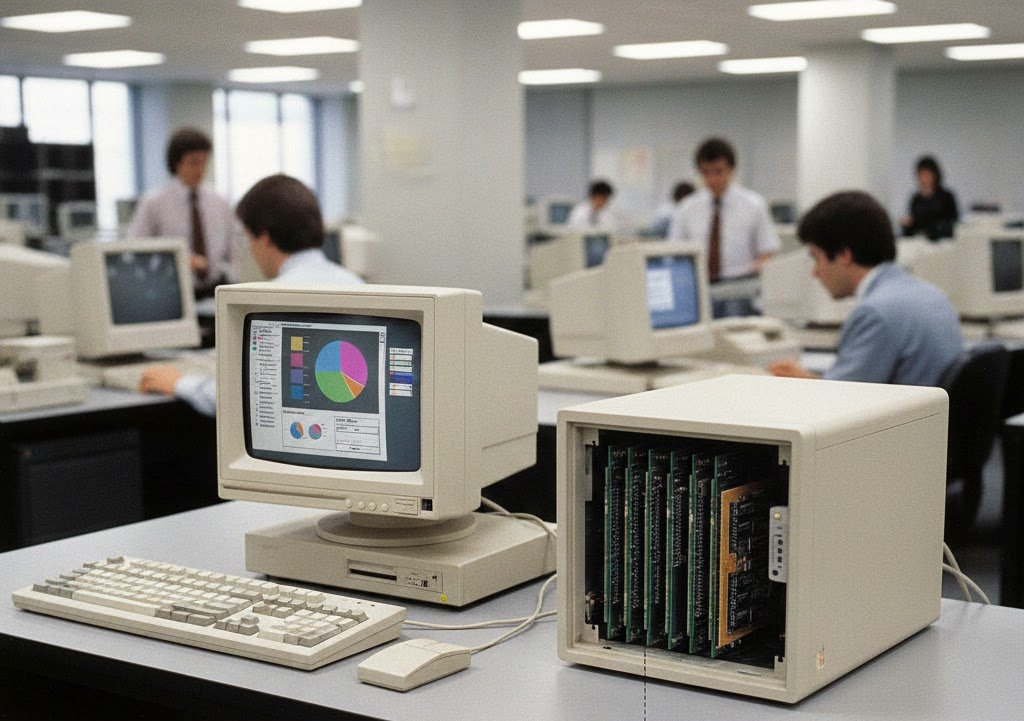
Macintosh II – A Modular Marvel in Apple History
Introduction: When Apple Broke Its Own Rules
Spring 1987. Apple Computer rolled out something that looked almost heretical. A Macintosh that looked nothing like a Macintosh. The iconic all-in-one design Steve Jobs championed with the original Mac? Gone. In its place stood a beige, modular beast that you could easily mistake for an IBM PC clone. This was the Macintosh II, and honestly, it changed what “being a Mac” meant forever.
We think of the Macintosh II as more than just a new computer. It was a declaration. Color came to the Mac platform for the first time. Six NuBus expansion slots opened up possibilities nobody expected. A 32-bit Motorola 68020 processor left everything before it looking sluggish. At a starting price of $3,898 (and that got you no monitor, no keyboard, no hard drive), Apple aimed this thing straight at professionals who wanted power. And flexibility.
Its legacy still matters today. Apple proved it could change direction without losing its identity. Maybe more importantly, the Mac II saved the company from becoming irrelevant.
The Genesis and Historical Context
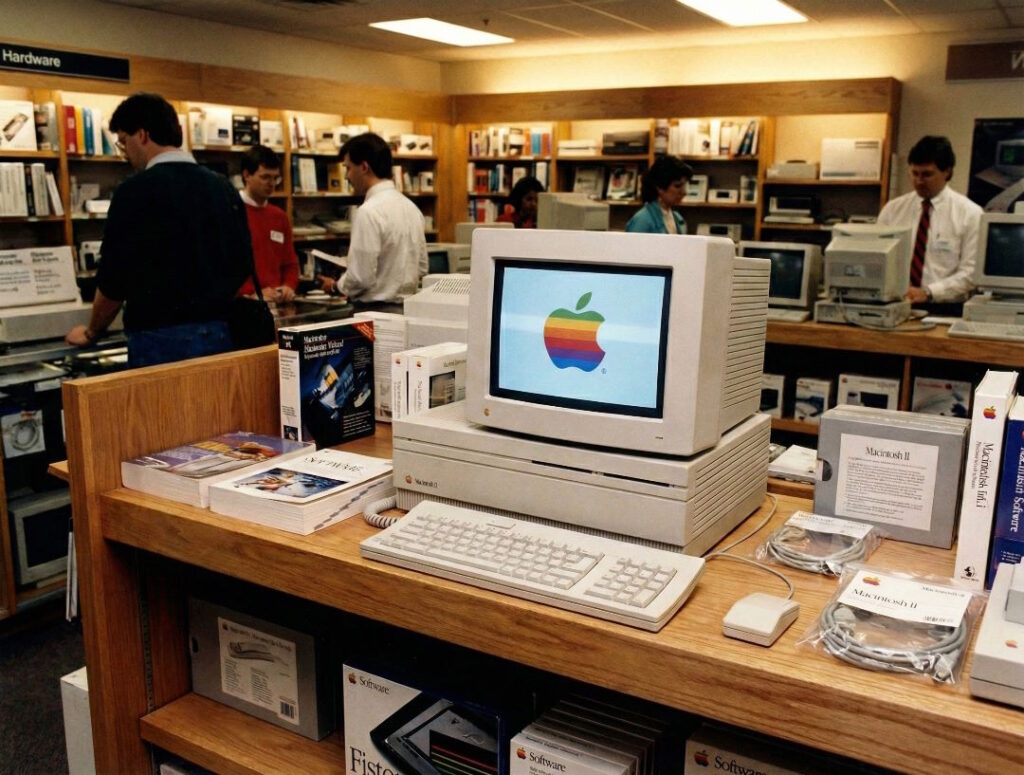
The Spark of Innovation
By 1985, Apple hit a wall. The original Macintosh had a graphical interface that felt almost magical. But it was struggling. IBM PC compatibles kept gaining ground. The Mac’s closed architecture and tiny memory made competing in business markets nearly impossible. Corporations wanted expandability. They wanted raw power. The Mac couldn’t deliver.
Steve Jobs left Apple in 1985. John Sculley took charge. Engineer Jean-Louis Gassée became president of product development, and he pushed a vision that would have made the original Mac designers cringe: openness, power, professional-grade capabilities. A complete departure from the sealed box philosophy.
The World Before Macintosh II
Picture the computing landscape of 1986. Beige boxes everywhere, all running MS-DOS. Powerful machines, sure. User-friendly? Not even close.
The Macintosh proved personal computers could be intuitive. Even delightful. But 128KB of RAM (later bumped to 512KB) and zero expansion slots meant professionals looked elsewhere. Color computing existed on expensive workstations from Sun and Silicon Graphics. Designers stuck with black and white on their Macs while desktop publishing transformed print media around them. The market needed a machine combining Mac simplicity with serious pro capabilities.
Birthing a Legend
The Macintosh II project carried the internal codename “Paris” (sometimes “Milwaukee”). Brian Berkeley led the engineering team through decisions that would have seemed unthinkable two years earlier.
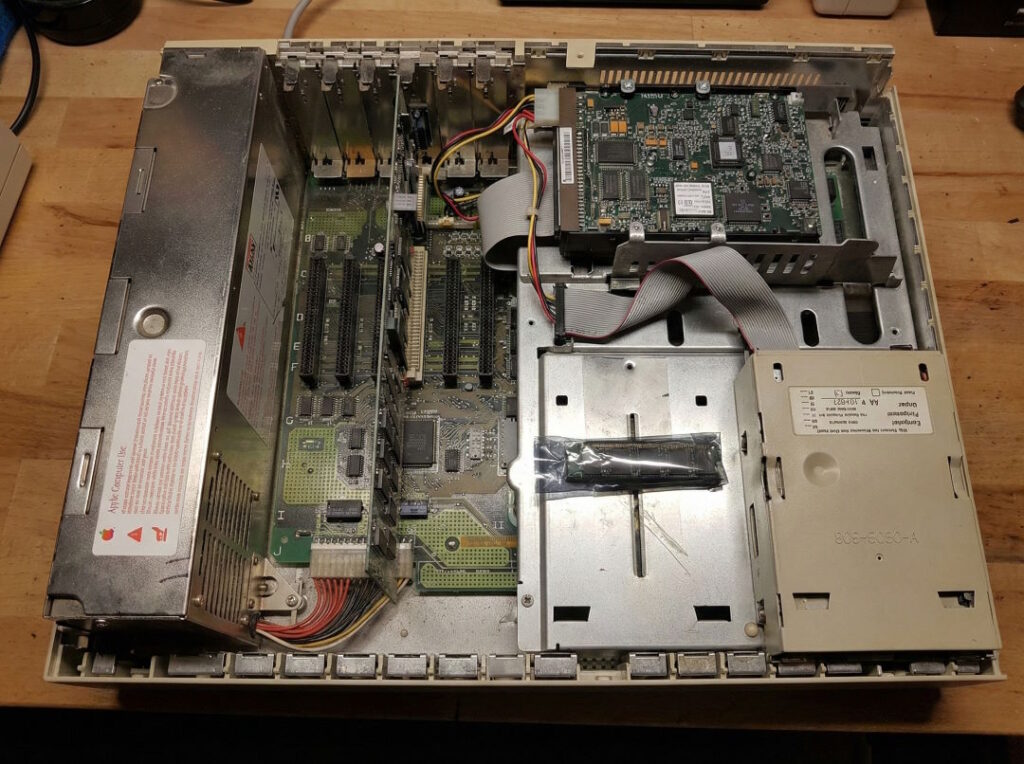
They picked the NuBus expansion architecture. MIT developed this open standard. Third-party manufacturers could now create expansion cards. Graphics cards, networking solutions, specialized hardware for specific industries. An entire ecosystem sprang up. The traditional horizontal Mac case gave way to a tower-style design with room for internal hard drives and multiple NuBus cards.
March 2, 1987. Apple announced the Macintosh II alongside the more affordable Macintosh SE. Shipping started in April. The premium price tag scared nobody away. A fully configured system with color monitor ran over $7,000. Demand crushed supply anyway.
Key Innovations and User Experience
The Game-Changer: Color Comes to Macintosh
Color graphics. That’s what people remember most about the Macintosh II. Mac users could finally work with 256 colors (or 16 colors at higher resolutions). This wasn’t just eye candy. Entire industries changed overnight.
Graphic designers previewed work in color before sending it to print. Scientists visualized data with meaningful color coding. Presentations stopped being boring. According to our analysts, the Mac II didn’t just add color to computing. It gave imagination a canvas.
The Apple Macintosh II Video Card powered all of this. You could get it in 4-bit (16 colors) or 8-bit (256 colors) versions. Third-party vendors jumped in fast, releasing cards supporting 24-bit “true color” graphics. Pretty remarkable for 1987.
Under the hood sat a 16 MHz Motorola 68020 processor paired with a 68881 floating-point coprocessor. Complex calculations became possible. Large file manipulation finally worked. Architects ran CAD software. Financial analysts crunched massive spreadsheets without watching spinning beach balls. The Mac II made professionals take Apple seriously.
Cheers and Jeers
Response to the Macintosh II ran overwhelmingly positive. Publications praised its power and flexibility. MacUser magazine called it “the Mac for the rest of the decade.” BYTE ran impressive benchmarks. People wanted what Apple was selling.
Critics existed too. That price tag stung. A fully loaded system cost several months’ salary for average workers. Some saw the separate monitor as a step backward from the original Mac’s elegant simplicity. The beige, boxy design? It lacked personality compared to the original Macintosh. Looked like every other PC on the market.
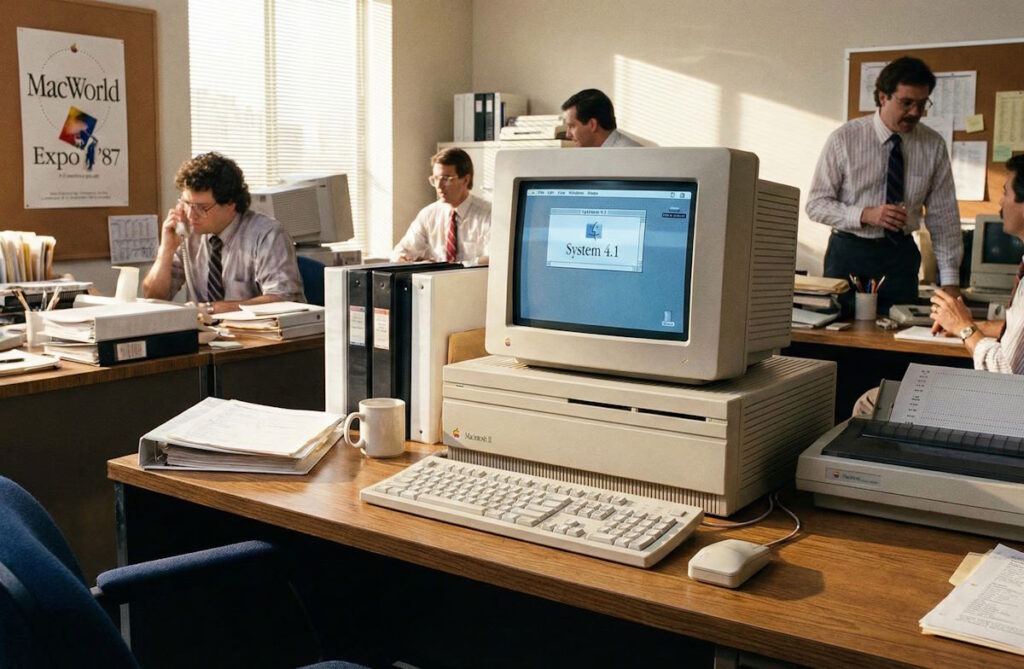
Technical problems popped up as well. Early adopters found not all Mac software worked with the 68020 processor or the new color display system. System 4.2 (quickly updated to System 5) sometimes choked on the new hardware.
These complaints? They faded. Jean-Louis Gassée said it best at launch: “This is the Mac that will bring Apple into the enterprise.”
The Legacy and Modern Echoes
Ripples Through Time
The Macintosh II reshaped Apple’s product strategy. It proved the company could serve consumers and professionals simultaneously. That dual identity persists today. We think the Mac Pro’s focus on expandability and raw power traces directly back to those six NuBus slots.
Financially, the Mac II saved Apple during a rough period. Capturing the high-margin professional market brought in revenue that funded future innovations. Without Mac II sales, there might never have been a PowerBook. Or an iMac. Or an iPhone, honestly.
The “Macintosh II family” followed. The IIx, IIcx, IIci, IIfx, and IIsi all carried forward the same principles. Power. Expandability. These machines dominated professional computing through the early 1990s.
Echoes in Eternity
Nearly four decades later, the Macintosh II stands tall. It reminds us that innovation sometimes means breaking your own rules. Professional needs deserve professional tools. Beautiful software deserves capable hardware.
Today’s modular Mac Pro, with its MPX Module expansion bays and professional workflow focus, carries the Mac II’s DNA. The Mac Studio does too. Power for those who need it, wrapped in the Mac experience. That promise started here.
If you ever encounter a working Macintosh II, take a moment. Boot it up. Listen for that startup chime. Watch color fill the CRT screen. That machine changed computing. Full stop.
What’s your favorite memory from the Macintosh II era? Drop your stories in the comments. We’d love to hear them.
Technical Specifications
Here are the specs for the original Macintosh II (March 1987):
| Category | Specification Details |
|---|---|
| Introduced | March 2, 1987 (shipped April 1987) |
| Discontinued | January 15, 1990 |
| Original Price | $3,898 (base system without monitor/keyboard) |
| Form Factor | Modular Desktop (separate monitor) |
| Dimensions & Weight | 14.4 × 18.7 × 5.5 in (36.6 × 47.5 × 14 cm), 24 lbs (10.9 kg) |
| Processor: | |
| Processor Type | Motorola 68020 |
| Processor Speed | 16 MHz |
| FPU | Motorola 68881 (16 MHz) |
| Memory: | |
| Standard RAM | 1 MB |
| Maximum RAM | 8 MB (68 MB with FDHD upgrade, 128 MB with IIx ROM) |
| RAM Type | 30-pin SIMM (installed in groups of 4) |
| Display (external): | |
| Video Card | NuBus graphics card (required, sold separately) |
| 4-bit card | 16 colors at 640×480, 256 colors at 512×384 |
| 8-bit card | 256 colors at 640×480 |
| Max Displays | Up to 6 (one per NuBus slot) |
| Storage & Media: | |
| Floppy Drive | 800 KB 3.5″ (supports 1–2 drives) |
| Hard Drive | Optional internal 20 MB or 40 MB SCSI |
| Connections: | |
| Expansion Slots | 6× NuBus slots |
| Ports | 2× ADB, 2× RS-422 Serial (mini-DIN-8), 1× SCSI (DB-25) |
| Audio | 8-bit mono output, speaker port |
| Wireless | None |
| Software: | |
| Original OS | System 4.2 / Finder 5.5 |
| Maximum OS | System 7.5.5 (Mac OS 7.5.5) |